 how-to
Personalized Nutrition for Chronic Inflammation: A How-To Guide
Table of Contents
- Understanding Nutrition and Chronic Inflammation
- Step 1: Assess Your Current Dietary Pattern and Inflammatory Response
- Step 2: Build Your Anti-Inflammatory Diet Foundation
- Step 3: Identify Foods That Reduce Inflammation for Your Body
- Step 4: Create Your Anti-Inflammatory Meal Plan
- Step 5: Track Progress and Adjust Your Approach
- Working With a Professional: When and How to Seek Guidance
- Frequently Asked Questions
Last Updated: October 15, 2026
Understanding Nutrition and Chronic Inflammation
Chronic inflammation is a persistent immune response that damages healthy tissue over time, and what you eat directly fuels or reduces it. At Advanced Cancer Coaching, we help patients use personalized nutrition for chronic inflammation as a cornerstone of recovery and resilience.
Certain foods trigger inflammatory pathways while others activate anti-inflammatory responses, and your genetics, gut microbiome, and individual food responses all play a role.
You don't need to guess: identify which foods reduce inflammation for your body specifically, then build a sustainable eating pattern around them. This guide walks you through five concrete steps.
Step 1: Assess Your Current Dietary Pattern and Inflammatory Response
Track what you eat for one week without changing anything. Log meals, snacks, and how you feel afterward: energy, digestion, joint pain, fatigue, and any other symptoms you track.
Track baseline symptoms and inflammatory markers
Many people feel better or worse after certain meals but never connect the dots. Keep a simple log: food eaten, time, and how you felt one to two hours later.
If you have blood work, ask your doctor about C-reactive protein (CRP) or other inflammatory markers for a baseline number.
Distinguish food reactions from other causes
A key mistake is blaming food for every symptom. Joint pain might come from stress or poor sleep; fatigue might signal overtraining or medication side effects.
Ask yourself: Did this symptom appear after I ate, or was it present all day? Does it happen with this food every time, or just sometimes?
If a symptom appears consistently two hours after eating a specific food, food reaction is likely. If it's random or tied to stress, look elsewhere first.
Step 2: Build Your Anti-Inflammatory Diet Foundation
Once you understand your baseline, add foods known to reduce inflammation. These building blocks work for most people.
Omega-3 fatty acids and polyunsaturated fats
Omega-3 fatty acids calm inflammatory pathways. They're found in fatty fish, walnuts, flaxseeds, and chia seeds.
If you don't eat fish, a handful of walnuts or a tablespoon of ground flaxseeds daily provides meaningful support, though plant sources are less concentrated.
Avoid excess omega-6 oils from processed foods; vegetable, soybean, and corn oil promote inflammation in large amounts. Use olive oil instead.
Colorful produce, berries, and antioxidants
Berries, dark leafy greens, and colorful vegetables contain antioxidants that reduce inflammatory markers.
Berries are especially potent: a half-cup of blueberries, raspberries, or blackberries daily delivers high antioxidant density.
Dark leafy greens like spinach, kale, and Swiss chard are anti-inflammatory staples. Add them to eggs, soups, or smoothies if you don't enjoy salads.
Whole grains and dietary fiber
Whole grains and dietary fiber feed your gut microbiome, which produces compounds that reduce systemic inflammation. Switch from white bread and refined pasta to whole grain versions.
Brown rice, oats, barley, and quinoa all work; aim for at least one serving per meal. Fiber also improves digestion and stabilizes blood sugar, reducing inflammatory spikes.
Step 3: Identify Foods That Reduce Inflammation for Your Body
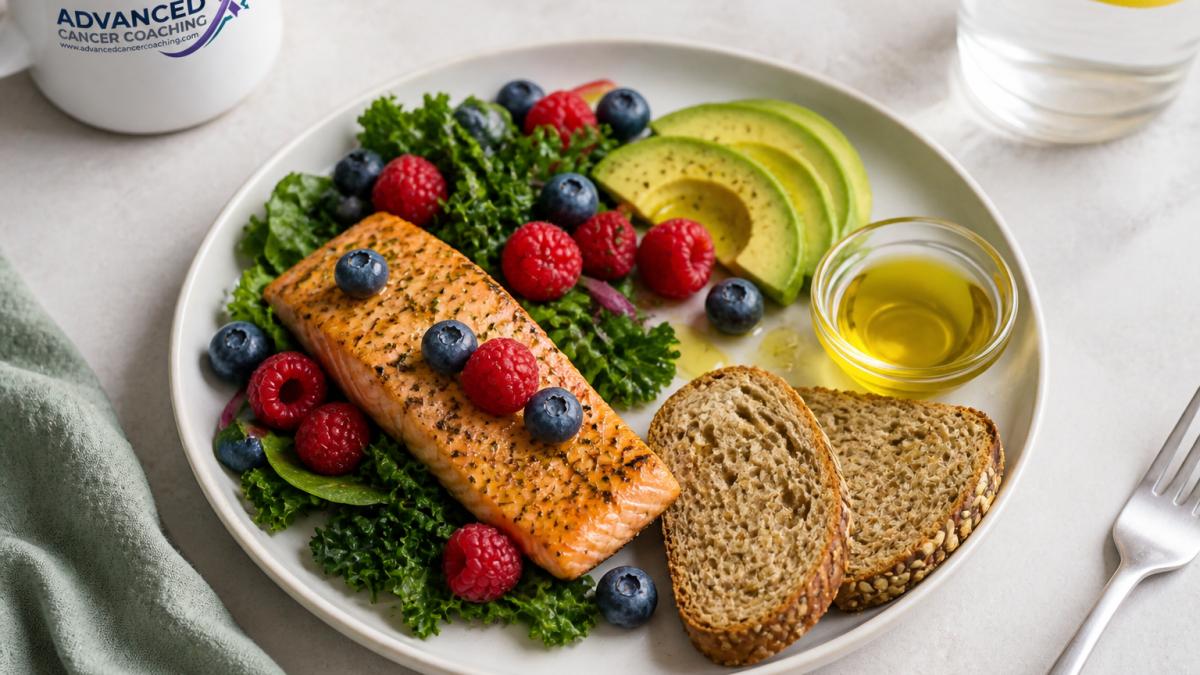
Not every anti-inflammatory food works equally for every person. Your individual response matters more than any list, which is where personalization becomes a process.
Mediterranean-style eating as a starting framework
The Mediterranean dietary pattern is the best-studied template for lowering inflammation, emphasizing olive oil, fish, vegetables, legumes, nuts, and whole grains. If you need a default, start here.
Mediterranean eating is flexible: some people thrive on more fish, others on plant-based protein; some need more carbohydrates, others less. Use the pattern as your framework, then personalize within it.
A step-by-step elimination and reintroduction process
Most people never isolate which foods help or hurt because they change everything at once. Work through this structured process with a registered dietitian or clinician, especially if you have a chronic condition, take medications, or have a history of disordered eating.
- Stabilize first. Eat your Mediterranean-style baseline for two to three weeks without removing anything. Log symptoms daily so you have a clean comparison point.
- Pick one suspect at a time. Choose a single food or category you suspect, not a whole group. Common suspects include added sugars, refined grains, ultra-processed snacks, alcohol, and specific dairy or wheat products.
- Remove it for two to four weeks. Keep everything else the same. If nothing changes, the food probably isn't your trigger, and you can add it back.
- Reintroduce deliberately. Add the food back in a normal portion, once, and track symptoms for 48 to 72 hours. A true reaction tends to repeat when you retest.
- Confirm before you commit. Repeat the remove-and-reintroduce cycle at least twice before permanently cutting a food. One bad day is not a diagnosis.
This is slower than an internet elimination diet, and that is the point. It produces information you can trust.
Distinguishing food reactions from other causes
If a symptom appears consistently within a few hours of a specific food and repeats on retest, a food reaction is plausible. If it is random or tracks with stress and sleep, look there first, and let a registered dietitian help you sort it out.
What the evidence says about microbiome and genetic testing
Microbiome and genetic testing are heavily marketed as shortcuts to a personalized diet. The evidence does not yet support using them to prescribe specific foods for inflammation.
- Microbiome tests describe gut bacteria diversity, which generally correlates with better health, but the same result yields different recommendations from different companies, and diet rapidly changes the microbiome. A snapshot does not tell you which foods reduce your inflammation.
- Genetic tests for diet look at variants affecting nutrient metabolism, such as caffeine or fats. These variants are real but have small effect sizes; your current health, medications, and environment usually matter more.
If you explore testing, treat it as one input, not a prescription. Ask what it can and cannot establish, who interprets it, and whether the result would change your plan.
Avoid spending hundreds of dollars on microbiome or genetic testing as a shortcut to personalization. A structured food-and-symptom log, reviewed with a clinician, is usually a more accurate predictor of what works for your body.
Personalization is a process, not a product. Start with a Mediterranean-style baseline, change one variable at a time, confirm reactions before you cut foods permanently, and treat testing as a supplement to, not a replacement for, careful tracking.
Step 4: Create Your Anti-Inflammatory Meal Plan
Now build a plan you can actually follow. The best diet is one you'll stick to.
Personalization for your health conditions and medications
If you have a specific diagnosis, arthritis, cardiovascular disease, metabolic disorder, or cancer, certain foods matter more.
Some medications affect nutrient absorption. Some foods interfere with medication timing. Some dietary patterns clash with specific conditions.
If you're undergoing cancer treatment, discuss your nutrition plan with your oncology team first to prevent conflicts and support treatment response.
Building flexibility into your eating pattern
Rigid diets fail. You need a plan flexible enough for real life: social meals, travel, stress, and changing appetite.
Choose three to five breakfast options and five to seven lunch and dinner combinations, then rotate them to prevent boredom while keeping meals simple.
Allow one meal per week where you eat what you want; this prevents deprivation and makes the plan sustainable long-term.
| Element | Your Choice | Frequency |
|---|---|---|
| Breakfast option 1 | Example: eggs and berries | 2-3 times weekly |
| Lunch protein | Example: grilled salmon | 2-3 times weekly |
| Dinner vegetable | Example: roasted broccoli | Daily |
| Healthy fat | Example: olive oil or avocado | Every meal |
| Whole grain | Example: brown rice or oats | 1-2 times daily |
Step 5: Track Progress and Adjust Your Approach
Personalized nutrition for chronic inflammation requires ongoing adjustment, since what works for three months may need tweaking as your body changes. Measure progress in a way that is honest, repeatable, and safe.
Measuring outcomes beyond subjective symptoms
Subjective symptoms matter but aren't enough alone. Track both how you feel and what you can measure.
Subjective tracking (daily or weekly):
- Energy level (1-10 scale)
- Pain level (1-10 scale)
- Digestion quality
Rate each on the same scale at the same time of day, and look for trends over four to six weeks, not daily noise. If energy improves two points on a ten-point scale and holds, that is meaningful progress.
Objective tracking (with your clinician):
- Body weight and waist circumference, measured the same way each time
- Blood pressure and resting heart rate, if relevant to your condition
- Lab markers your doctor orders, such as C-reactive protein (CRP), fasting glucose, or a lipid panel
Interpreting inflammatory markers responsibly
C-reactive protein (CRP) is the most commonly used blood marker of systemic inflammation. A standard CRP test measures general inflammation; a high-sensitivity CRP (hs-CRP) test detects lower levels and estimates cardiovascular risk. Your clinician interprets these numbers against your history, conditions, and medications.
A few cautions:
- CRP is not specific. It rises with infections, injuries, autoimmune flares, and other conditions, not just diet, so one high result does not mean your eating plan failed.
- Trends beat snapshots. Retest on your clinician's schedule, often every three to six months, and compare the direction of change rather than one number.
- Do not self-order and self-interpret. Ask your doctor which markers are relevant and what range they are watching.
When to adjust, and when to hold steady
Give any change at least four to six weeks before judging it. The body does not respond to diet overnight, and inflammation markers move slowly.
Adjust when:
- Symptoms are clearly worsening over two or more weeks
- A lab trend is moving in the wrong direction, as confirmed by your clinician
- Your health status changes, a new diagnosis, a new medication, or a flare
Hold steady when:
- You are seeing slow but steady improvement
- You just made a change and have not given it time
- You are tempted to overhaul everything because of one bad week
Keeping a simple progress log
You do not need an app; a notebook or spreadsheet works. Record four things weekly: what you ate (broad categories), symptom scores, medication or activity changes, and one note on how the week went. Bring this log to appointments for real data instead of vague memory.
Take a photo of your weekly log before each appointment. It is faster than explaining, and it helps your clinician spot patterns you might miss.
Measure both how you feel and what your clinician can test. Use trends, not single results, and give every change at least four to six weeks before deciding whether it worked.
Working With a Professional: When and How to Seek Guidance
Personalized nutrition for chronic inflammation works best with professional support. Knowing when to reach out matters.
You need professional guidance if you're managing a serious health condition, taking multiple medications, or navigating cancer treatment.
Advanced Cancer Coaching offers personalized coaching sessions designed exactly for this, integrating precision nutrition with your treatment plan and individual needs.
A professional can help you:
- Navigate conflicting dietary advice
- Adjust your plan as your health changes
- Distinguish food reactions from medication side effects
Personalized nutrition for chronic inflammation is not one diet, it's a process.
The challenge is knowing which adjustments to make and when to seek professional guidance.
Frequently Asked Questions
How do I know if my symptoms are caused by food or something else?
Food reactions typically appear within hours to days of eating a trigger food and improve when you avoid it consistently. Other causes, stress, sleep, infections, or medication side effects, follow different patterns. Track timing, symptoms, and what you ate using a food and symptom journal for 2-3 weeks. If a symptom improves when you remove a specific food but returns when you reintroduce it, that suggests a food connection. For unclear cases, work with a registered dietitian or healthcare provider to rule out other causes before assuming food is the culprit.
Can personalized nutrition for chronic inflammation help during cancer treatment?
Yes, personalized nutrition can support your body during cancer treatment by reducing systemic inflammation, maintaining energy, and potentially improving treatment tolerance. However, your oncology team must approve any dietary changes, especially if you're on specific medications or protocols. Certain foods and supplements can interact with chemotherapy or immunotherapy. Work with a nutrition professional experienced in oncology to ensure your personalized approach complements your treatment plan rather than interfering with it. Never replace medical advice with dietary changes alone.
What should I track to measure progress on an anti-inflammatory diet?
Track both objective and subjective measures. Objective markers include inflammatory blood tests (C-reactive protein, ESR) ordered by your doctor every 6-8 weeks, and clinical outcomes like energy levels, pain severity, or disease-specific symptoms. Subjective tracking involves a food and symptom journal noting what you ate, when symptoms appeared, and their intensity. After 4-6 weeks of consistent dietary changes, review your journal for patterns. Many people notice improved energy, reduced joint pain, or better digestion before blood work shows changes. Avoid expecting immediate results; meaningful shifts in inflammatory markers typically take 8-12 weeks.
Is genetic or microbiome testing necessary to personalize my anti-inflammatory diet?
Genetic and microbiome testing can provide useful information, but they're not essential to start. You can begin with foundational anti-inflammatory foods, omega-3 fatty acids, colorful produce, whole grains, and healthy fats, and track your individual response. Testing becomes most valuable if you're not seeing expected improvements after 8-12 weeks, or if you have complex health conditions or medication interactions. A registered dietitian can help you interpret results and adjust your meal plan accordingly. Focus first on proven dietary patterns; testing should refine, not replace, basic personalization work.