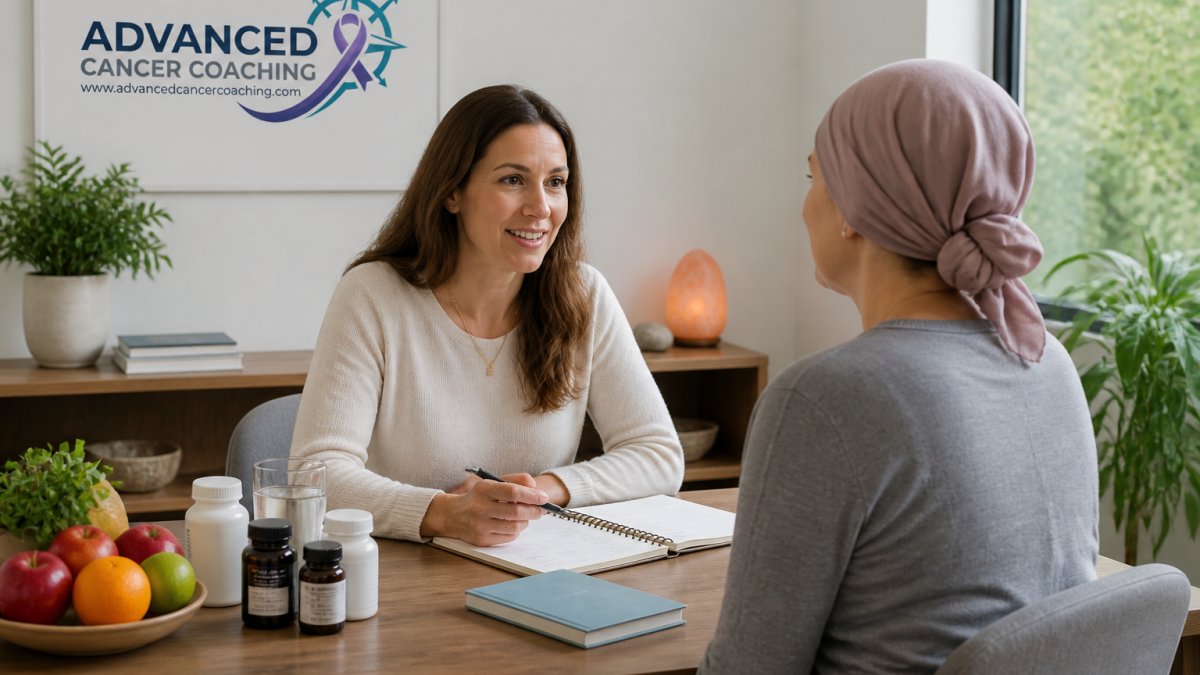
 ultimate-guide
Holistic Cancer Recovery Strategy: A 2026 Guide
Table of Contents
- What Holistic Cancer Recovery Means
- Building Your Cancer Recovery Plan
- Nutrition During Cancer Treatment: Supporting Your Body
- Complementary Therapies for Cancer: Evidence and Safety
- Exercise During Cancer Treatment: Rebuilding Strength
- Stress Reduction, Emotional Well-Being, and Resilience
- Coordinating Holistic Support With Your Oncology Team
- Frequently Asked Questions
Last Updated: October 20, 2026
What Holistic Cancer Recovery Means
A holistic cancer recovery approach integrates conventional oncology with supportive care addressing the whole person: nutrition, physical activity, emotional resilience, and stress reduction.
Advanced Cancer Coaching designs recovery plans that coordinate with your oncology team's protocols to enhance treatment response, reduce side effects, and build lasting resilience against recurrence.
Your medical team focuses on eliminating disease, which is essential.
Patients who combine conventional treatment with nutrition support, gentle movement, and stress management often experience better treatment tolerance, faster recovery, and improved quality of life.
Building Your Cancer Recovery Plan
Most recovery advice fails because it treats cancer as a single event. Your needs shift dramatically across four phases, and a plan that works at diagnosis can be counterproductive later. Build around your current phase, set measurable goals, and revisit as you move through care.
A phase-by-phase framework
Phase 1, Around diagnosis and treatment planning. The priority is information and baseline.
Phase 2, Active treatment. The priority is tolerance and preservation, not optimization.
Phase 3, Early recovery after treatment ends. The priority is rebuilding. Appetite and energy return unevenly, and deconditioning is real.
Phase 4, Long-term survivorship. The priority is sustaining function and monitoring. Focus shifts to cardiovascular health, bone health, weight management, and mental health, plus adherence to surveillance schedules.
Setting measurable goals and tracking progress
Vague goals ("eat healthier," "reduce stress") don't survive a hard week. Replace them with observable targets your clinician can review:
- Symptoms: a brief weekly log of nausea, fatigue, pain, and appetite on a simple 0-10 scale.
- Function: how many minutes you can walk or how many flights of stairs you can climb without stopping, a practical proxy for capacity.
- Activity: minutes of movement per week, tracked on a phone or a paper log.
- Sleep: approximate hours and a one-word quality rating.
- Quality of life: a short validated questionnaire your care team can point you to, completed monthly.
Keep tracking lightweight, a two-minute weekly entry beats an elaborate system you abandon. Share the log at appointments so trends inform decisions, and set activity goals with your clinician's input, adjusting by phase rather than pushing through fatigue or pain.
Cost, access, and lower-cost alternatives
Holistic recovery doesn't require expensive retreats. Insurance coverage for supportive care is inconsistent, some plans cover nutrition counseling, physical therapy, or behavioral health, while acupuncture, massage, and wellness coaching are often out of pocket.
Lower-cost substitutes are often just as effective: a walking program instead of a gym membership, a free meditation app instead of a paid course, an insurance-covered dietitian instead of a private coach, and support groups instead of private therapy.
Nutrition During Cancer Treatment: Supporting Your Body
Nutrition is where many patients feel most confused.
During active treatment, priorities shift. As your body stabilizes, introduce anti-inflammatory foods that support immune function and reduce systemic inflammation.
A common mistake is rigid adherence to "cancer-fighting foods" your body can't tolerate. If you're nauseated, dense vegetables are counterproductive.
Specific strategies: small, frequent meals rather than three large ones; protein at every eating opportunity to preserve muscle; and nutrient-dense foods timed when appetite is highest.
Working with your oncology team on dietary choices
Your oncology team needs to know what you're eating and what supplements you're taking. Some interact with chemotherapy or radiation, reducing effectiveness or increasing side effects; others are genuinely beneficial. Telling them apart requires conversation between your health coach and oncologist.
Bring a list of all supplements, herbs, and dietary changes to your oncology appointments. Ask specifically: "Will this interfere with my treatment?" rather than assuming silence means approval. Most oncologists welcome this dialogue, they want your treatment to work as well as possible.
Complementary Therapies for Cancer: Evidence and Safety
Complementary therapies, acupuncture, massage, mind-body practices, herbal medicine, can reduce side effects and improve quality of life. The operative word is complementary: they support conventional treatment, never replace it. The harder question is which are worth your time and money and which carry real risk, that requires grading the evidence and screening for interactions.
A practical evidence-grading framework
Rather than treating "research shows" as a single yes/no, sort any therapy into one of four tiers:
- Tier 1, Guideline-endorsed supportive care. Therapies with multiple randomized trials and inclusion in major oncology supportive-care guidelines. Acupuncture for chemotherapy-induced nausea and vomiting is the clearest example; so is structured mindfulness-based stress reduction for anxiety and sleep disturbance. These are reasonable to pursue alongside treatment.
- Tier 2, Promising but mixed. Some trials show benefit, others don't, or the trials are small. Massage for pain and anxiety, yoga for fatigue and quality of life, and relaxation training generally sit here. Worth trying if your oncology team has no objection, with realistic expectations.
- Tier 3, Weak or anecdotal. Popular in wellness circles, thin on human trial data. Many herbal and "immune-boosting" supplements fall here. Not necessarily harmful, but don't pay a premium or delay proven care for them.
- Tier 4, Avoid or high-risk. Therapies with known interaction potential or harm during treatment, certain high-dose antioxidants, some botanicals that affect liver enzymes or clotting, and any practitioner who advises delaying or reducing conventional treatment.
When evaluating a therapy, ask four questions: How many human trials, and how large? Was it studied in people receiving your treatment? Is the mechanism plausible? What is the interaction risk with your regimen? Anecdotal reports and mechanistic theories are not clinical evidence.
Screening supplements and therapies for interactions
Interaction risk is real and varies by regimen. The practical screening process:
- List everything. Every supplement, herb, tea, topical, and high-dose vitamin, including "harmless" ones like turmeric, green tea extract, vitamin C, and fish oil. Dose matters; a culinary amount and a concentrated capsule are different exposures.
- Bring the actual bottles to your oncology appointment or send your pharmacist the labels. Ingredient lists and doses beat memory.
- Ask about your specific regimen. Different chemotherapy agents, targeted therapies, and immunotherapies have different interaction profiles. A supplement that is fine with one regimen may be problematic with another.
- Ask about timing, not just yes/no. Some clinicians allow a supplement but want it separated from treatment by a set window. Get the instruction in writing.
- Re-screen when treatment changes. A supplement cleared during chemotherapy may need re-evaluation if you move to radiation, surgery, or a maintenance drug.
Your pharmacist is often the most underused resource here, many hospital systems have oncology pharmacists who can run a formal interaction check on your full list in minutes.
Choosing practitioners who understand cancer care
Cancer-specific training matters more than credentials. An oncology massage therapist knows which techniques are safe during treatment and which areas to avoid after surgery or with lymphedema risk. An acupuncturist experienced with cancer patients understands neutropenia precautions and safe needle sites.
Ask any practitioner three questions before booking: Have you worked with patients receiving my treatment? What precautions do you take for low blood counts, bleeding risk, or lymphedema? Will you communicate with my oncology team?
Exercise During Cancer Treatment: Rebuilding Strength
Movement during cancer treatment is counterintuitive: you feel exhausted, so rest seems logical.
The goal isn't athletic performance, it's maintaining function. Walking, swimming, gentle yoga, or tai chi three to five times weekly provides measurable benefit.
Exercise also addresses emotional well-being. Movement releases endorphins, reduces anxiety, and creates a sense of agency when so much of treatment feels out of your control.
Coordinate with your oncology team about activity levels across treatment phases. A health coach experienced in cancer recovery can design a progression that matches your actual capacity.
Stress Reduction, Emotional Well-Being, and Resilience
A cancer diagnosis triggers profound stress.

Stress reduction isn't luxury, it's medical necessity. Chronic stress suppresses immune function, increases inflammation, and worsens side effects. Meditation, breathwork, journaling, and time in nature can help manage stress.
Emotional well-being means acknowledging difficult feelings rather than suppressing them. Many patients feel pressure to "stay positive," as if optimism alone determines outcomes, it doesn't.
Resilience develops through small practices over time.
Coordinating Holistic Support With Your Oncology Team
Effective coordination requires transparent communication.
Schedule a conversation with your oncology team early: "I'm working with a health coach on nutrition and lifestyle support.
Document decisions. When your oncologist approves a supplement or dietary approach, note it.
Advanced Cancer Coaching emphasizes this coordination from the first session.
Coordinating all these elements, medical treatment, nutrition, supplements, activity, emotional support, is exactly why working with an experienced health coach matters.
Frequently Asked Questions
What does a holistic cancer recovery strategy actually include?
Holistic cancer recovery integrates nutrition tailored to your treatment, physical activity adapted to your energy levels, stress management practices, and complementary therapies chosen for safety and evidence. It also includes emotional and spiritual support, family involvement, and close coordination with your oncology team. The goal is to support your body's resilience, reduce inflammation, manage treatment side effects, and improve quality of life alongside conventional cancer treatment, not replace it.
Can complementary therapies for cancer be used safely with chemotherapy or radiation?
Many complementary therapies can be used alongside conventional treatment, but timing and selection matter. Some supplements or herbs may interact with chemotherapy or reduce its effectiveness. Before starting any complementary therapy, discuss it with your oncologist. Evidence-graded options like acupuncture for nausea, guided meditation for stress, and gentle yoga have supportive research. Your care team can help you identify which therapies are safe during your specific treatment phase.
How should I approach nutrition during cancer treatment if my oncologist hasn't given me detailed dietary guidance?
Start by asking your oncology team for a referral to an oncology dietitian, who can create recommendations specific to your cancer type and treatment. In the meantime, focus on nutrient-dense foods that are easy to digest, stay hydrated, and eat small frequent meals if appetite is low. Avoid extreme diets or major dietary changes without professional input. A personalized nutrition plan considers your treatment side effects, body composition, and recovery goals, generic wellness advice often misses these specifics.
What type of exercise is safe during cancer treatment?
Exercise during cancer treatment should be tailored to your energy, treatment phase, and medical clearance. Low-impact activities like walking, gentle yoga, swimming, or tai chi are often well-tolerated. Start slowly and adjust based on fatigue and side effects. Strength training can help preserve muscle mass during and after treatment. Always get clearance from your oncology team before starting exercise, especially if you have bone metastases or other complications. Even short sessions, 10 to 15 minutes, provide benefits for mood, strength, and recovery outcomes.
How do I know if a complementary therapy for cancer is backed by evidence?
Look for therapies studied in clinical trials or systematic reviews, particularly those published in peer-reviewed oncology journals. Ask your healthcare provider or an oncology social worker for evidence summaries. Some organizations publish safety and efficacy data on complementary approaches. Be cautious of claims that sound too good to be true or that discourage conventional treatment. Reputable sources grade therapies by evidence level, some have strong research support, others have preliminary evidence, and some lack safety data entirely.
What should my cancer recovery plan prioritize in the first few weeks after diagnosis?
In the early weeks, focus on understanding your diagnosis and treatment plan with your oncology team, stabilizing nutrition and sleep, and addressing immediate emotional distress. A structured cancer recovery plan typically includes: baseline health assessment, clear communication channels with your care team, strategies for managing early side effects, and identification of your support network. Avoid making major lifestyle overhauls immediately; instead, build a sustainable foundation. Professional guidance from an oncology-trained coach or dietitian can help you avoid conflicting advice and create a realistic, phase-specific plan.
How can I tell if holistic cancer recovery is actually working for me?
Track measurable recovery goals: energy levels, treatment tolerance, side effect severity, sleep quality, and emotional well-being. Some patients also monitor lab values or imaging outcomes with their oncologist. Progress often appears gradually, fewer missed treatment days, better appetite, improved mood, or faster wound healing. Work with your healthcare team to set realistic expectations; holistic support enhances treatment response and quality of life. Regular check-ins with your oncology team and coach help you adjust your strategy if something isn't working.