 ultimate-guide
Holistic Coaching for Cancer Patients: 2026 Guide
Table of Contents
- What Holistic Coaching for Cancer Patients Actually Does
- Cancer Coaching Benefits: What Patients Report Gaining
- Cancer Coach Qualifications: What Real Training Looks Like
- Questions to Ask a Cancer Coach Before You Commit
- Health Coaching for Cancer Survivors: Life After Treatment
- How Holistic Coaching Fits Alongside Your Oncology Team
- Common Mistakes Patients Make When Choosing a Coach
- Conclusion
- Frequently Asked Questions
Last Updated: October 18, 2026
What Holistic Coaching for Cancer Patients Actually Does
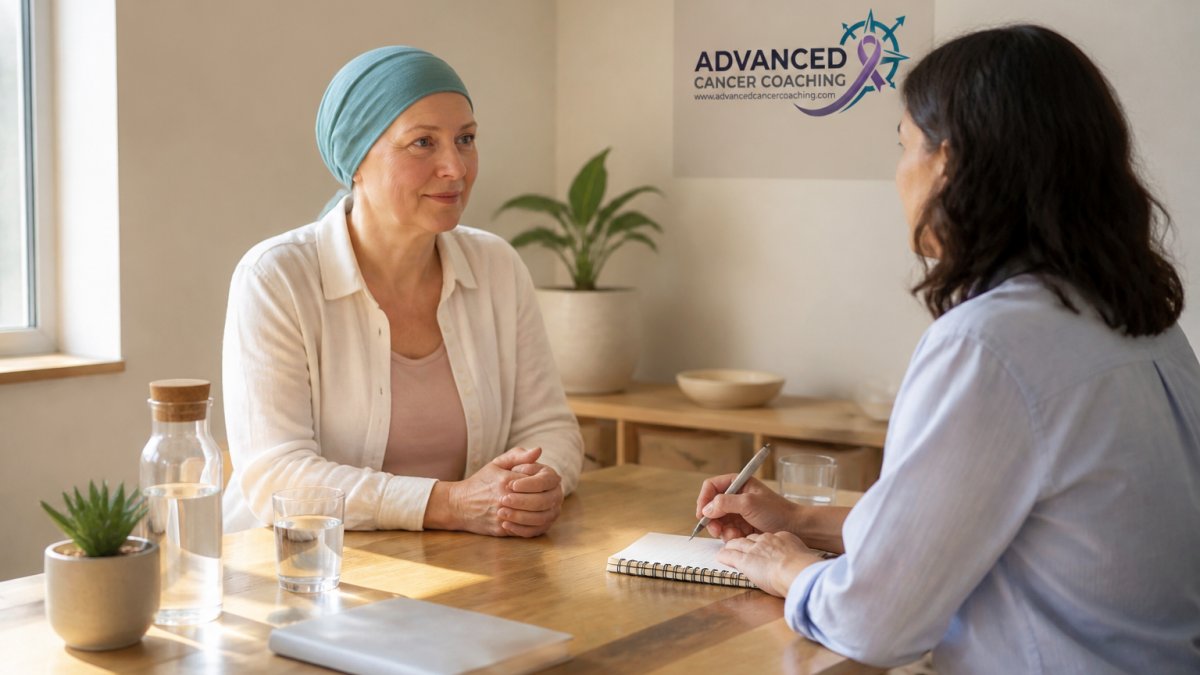
Holistic coaching for cancer patients is a structured support service that helps people manage nutrition, lifestyle, stress, and recovery alongside conventional medical treatment. At Advanced Cancer Coaching, we frame it as a complement to oncology care, never a substitute for it. The work is practical: building eating patterns that hold up during treatment, managing fatigue, and making sense of conflicting advice.
A Support Role, Not a Replacement
The line matters, and it should be stated plainly. A holistic coach does not diagnose, prescribe, or adjust treatment. What a coach does is translate the daily-living side of cancer care into something a patient can actually execute: what to eat when appetite is gone, how to move when energy is low, how to organize questions before an oncology appointment.
Patients often arrive having read contradictory guidance online. A good coach reconciles that noise against the patient's own treatment plan and flags anything that needs an oncologist's sign-off. That last step is not optional. Anything that could interact with treatment goes to the medical team first.
Cancer Coaching Benefits: What Patients Report Gaining
Patients most often describe three gains: less decision fatigue, a clearer daily routine, and a sense of control over the parts of their life that treatment does not govern. Much of that comes from having one place to ask the questions that a fifteen-minute oncology appointment cannot absorb.
The benefits tend to be practical rather than dramatic:
- A nutrition plan built around actual treatment side effects, not a generic "eat healthy" instruction
- Strategies for maintaining weight and muscle during periods of low appetite
- Help prioritizing which lifestyle changes matter most right now
- A written record of questions and concerns to bring to the medical team
That third point deserves emphasis. Coaching is as much about sequencing as it is about content. Trying to overhaul diet, sleep, and exercise at once during active treatment usually backfires. The useful approach is picking the one or two changes that will make the biggest difference this month.
Cancer Coach Qualifications: What Real Training Looks Like
Cancer coach qualifications vary widely, and the field is not uniformly regulated. That is the honest starting point. Some coaches hold formal health coaching certifications from accredited programs; others hold nutrition science backgrounds; others have research experience in diet and natural agents. The variation means patients have to ask.
Credentials Worth Asking About
A credential is only meaningful if it maps to the patient's situation. Ask what training the coach has completed, what their background is in oncology nutrition specifically, and whether they work from published research or personal philosophy.
At Advanced Cancer Coaching, our founder Mark Simon brings more than 20 years of research experience on diet and natural agents, and serves as Founder and Director of the Nutritional Oncology Research Institute. That research orientation is the differentiator we would point to.
Questions to Ask a Cancer Coach Before You Commit
The right questions separate a serious practitioner from a wellness generalist. Bring a short list to the first conversation and listen for specifics rather than reassurance.
| Question | What a good answer sounds like | Red flag |
|---|---|---|
| What is your training and background? | Named certifications, research or clinical background | Vague "certified wellness coach" with no detail |
| How do you coordinate with my oncology team? | Clear process for sharing plans and flagging interactions | "You don't need to tell your doctor" |
| How do you personalize a plan? | Questions about diagnosis, treatment phase, side effects, labs | A fixed protocol offered to everyone |
| What is your scope? | Clear statement that they do not diagnose or prescribe | Claims to treat or cure cancer |
| How is pricing structured? | Transparent session or package structure | Pressure to commit before any conversation |
The scope question is the one to weight heaviest. A coach who is clear about limits is more trustworthy than one who promises outcomes.
Health Coaching for Cancer Survivors: Life After Treatment
Health coaching for cancer survivors addresses a different problem than active-treatment coaching. The acute phase ends, appointments thin out, and patients are left managing recurrence worry, lingering fatigue, and a body that has changed, often with far less structure than before.
Survivorship coaching focuses on rebuilding. That means sustainable eating patterns rather than short-term protocols, an exercise approach that respects lingering limitations, and routines that reduce systemic inflammation over time. It also means resilience planning: what to monitor, what to raise with the care team, and how to keep healthy habits from collapsing once the crisis feeling fades.
Many survivors tell us the hardest part is the silence after treatment. Coaching fills some of that gap with structure and accountability, without pretending to replace surveillance scans or follow-up care.
How Holistic Coaching Fits Alongside Your Oncology Team
Coaching works best as a parallel track, not a competing one. The oncology team owns diagnosis, treatment decisions, and monitoring. The coach owns the daily-living plan that supports all three. When those roles are clear, patients get more from both.
In practice, that means the coach prepares the patient for appointments, helps interpret general guidance into personal action, and escalates anything clinical back to the medical team. We treat that escalation as a core part of the job, not an afterthought.
Common Mistakes Patients Make When Choosing a Coach
The first mistake is choosing on price alone. A lower session rate means little if the coach cannot speak to your cancer type or coordinate with your medical team. The second is accepting generic advice dressed up as personalization. If the plan sounds like it could apply to anyone, it probably does.
A third mistake is waiting until crisis to start. Patients who begin coaching early, while they still have energy to build routines, tend to get more from it than those who start mid-crisis. A fourth is treating coaching as a replacement for medical care, which no responsible coach should ever encourage.
- Choosing on price without checking qualifications
- Accepting a one-size-fits-all protocol
- Delaying until treatment is already overwhelming
- Hiding supplements or diet changes from the oncology team
- Expecting the coach to make medical decisions
The throughline across all five: coaching should make the medical care work better, not compete with it.
Conclusion
The hardest part of a cancer diagnosis is rarely a lack of information. It is sorting the useful from the noise while exhausted and under pressure. A well-chosen coach reduces that load, provided the relationship is built on clear scope, real qualifications, and coordination with the oncology team.
At Advanced Cancer Coaching, we build that support around precision nutrition, nutraceuticals, and lifestyle management, delivered through phone, Zoom, or in-person sessions. Our focus is helping patients stay a step ahead by harnessing natural and non-toxic healing modalities that support treatment rather than replace it. If you want a plan built around your specific situation, get started with Advanced Cancer Coaching today.
Frequently Asked Questions
What does a cancer coach do?
A cancer coach helps you organize the nutrition, lifestyle, and recovery side of treatment so it works with your oncology plan rather than against it. Sessions focus on practical decisions: what to eat during chemo, how to manage fatigue, which supplements to discuss with your care team, and how to build resilience after treatment. Holistic coaching for cancer patients is guidance and structure, not diagnosis or prescription. Your oncologist still leads medical decisions, and a good coach makes that partnership easier by translating broad advice into steps specific to your body and treatment.
How is a cancer coach different from an oncologist or therapist?
An oncologist diagnoses and treats cancer with medicine, surgery, radiation, and drugs. A therapist addresses emotional and psychological health. A cancer coach sits between those roles, focusing on daily habits: nutrition, movement, sleep, and supplement questions you want to raise with your care team. Cancer coaching benefits show up in the practical layer of treatment, such as reducing inflammation through diet or rebuilding strength after surgery. No coach should adjust your treatment plan, and any coach who claims to replace oncology care is a red flag worth walking away from.
What should I look for when choosing a cancer wellness coach?
Start with cancer coach qualifications: look for documented research or clinical background in nutrition and oncology, not just a general wellness certificate. Ask how long they have worked with cancer patients specifically, whether they coordinate with oncologists, and how they handle supplement questions. Ask for their approach to your cancer type, since a rare diagnosis needs more than generic advice. Finally, ask what happens if the fit is wrong after a session or two. A coach who welcomes those questions and answers them plainly is usually the safer choice.
Can a cancer coach recommend supplements?
A coach can explain what research says about specific nutrients and help you prepare questions for your oncology team, but supplement decisions belong with your care team because some compounds interact with chemotherapy and radiation. Ask any coach how they handle this boundary. A responsible answer includes checking with your oncologist before starting anything and adjusting recommendations to your treatment schedule. If a coach tells you to take high-dose products without looping in your medical team, treat that as a warning sign regardless of how confident they sound.
Is cancer coaching useful for survivors?
Health coaching for cancer survivors addresses a different phase: rebuilding strength, managing long-term side effects, lowering recurrence risk through diet and lifestyle, and handling the anxiety that often follows treatment. Survivors frequently ask about anti-inflammatory eating patterns, safe exercise progression, and how to stay vigilant without living in fear. Coaching gives that phase structure and accountability. Many survivors use coaching for a defined period, such as six months after treatment ends, then check in periodically as their needs change.
What questions should I ask before hiring a cancer coach?
Ask about their training and research background, how many patients with your cancer type they have worked with, and whether they communicate with oncologists. Ask what a typical session covers, how they measure progress, and what happens if you feel worse or your treatment changes. Ask about cost structure and cancellation terms before booking, since pricing depends on session format and frequency. Also ask them to describe a case where they told a patient to stop a protocol. The answer tells you whether they practice caution or sell certainty.