 ultimate-guide
Personalized Nutrition Plan for Cancer Recovery: 2026 Guide
Table of Contents
- Why One-Size-Fits-All Eating Advice Fails After Cancer Treatment
- What a Personalized Nutrition Plan for Cancer Recovery Actually Includes
- Dietary Strategies to Reduce Inflammation During Recovery
- Nutritional Support for Cancer Treatment Side Effects
- How to Manage Fatigue With Diet After Cancer
- Building Your Plan: Meal Prep, Budget, and Caregiver Support
- Frequently Asked Questions
Last Updated: September 27, 2026
Why One-Size-Fits-All Eating Advice Fails After Cancer Treatment
Generic advice like "eat more vegetables" collapses the moment you're staring at a plate you can't stomach. A personalized nutrition plan for cancer recovery is a structured eating strategy built around your specific diagnosis, treatment phase, side effects, lab values, and food preferences. It replaces guesswork with a protocol your body can actually use.
What a Personalized Nutrition Plan for Cancer Recovery Actually Includes
A personalized nutrition plan for cancer recovery starts with a nutritional assessment and translates into specific daily targets for calories, protein, fluids, and micronutrients. The plan adjusts as your treatment phase changes, not once at the start and never again.
Nutritional Assessment and Caloric Intake Goals
A qualified nutrition professional begins with a full assessment: current weight and weight history, body composition, treatment protocol, medications, lab work, and digestive symptoms. Caloric intake goals are then set to maintain or rebuild lean mass. During active treatment, many patients need more calories than they expect, sometimes well above their pre-diagnosis intake.
Macronutrients and Micronutrients That Support Healing
Protein is the macronutrient most patients under-consume. Lean protein at each meal supports immune system support and tissue repair. Whole grains and unsaturated fats provide sustained energy. Micronutrients, including antioxidants and vitamin D, matter for recovery, but high-dose supplementation during treatment should be reviewed with your oncology team because some nutrients interact with therapy.
Dietary Strategies to Reduce Inflammation During Recovery
Dietary strategies to reduce inflammation during recovery focus on whole, minimally processed foods and consistent eating patterns. Chronic inflammation slows healing and worsens fatigue. The goal isn't a perfect diet. It's a repeatable one.
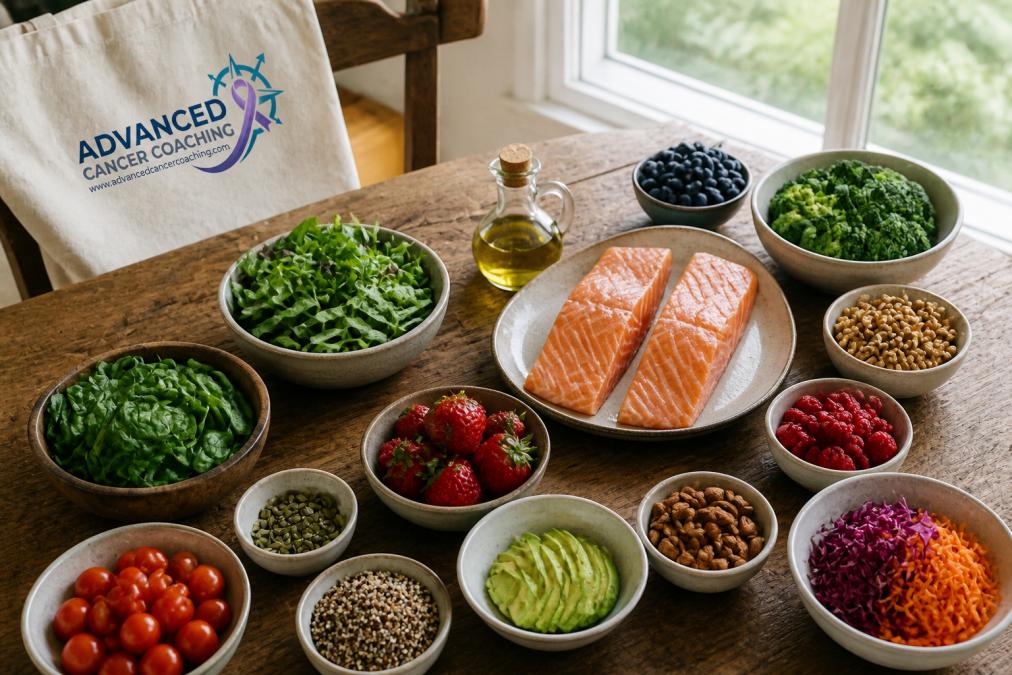
Unsaturated Fats, Antioxidants, and Fiber Intake
Build meals around olive oil, nuts, seeds, fatty fish, and colorful produce. These supply unsaturated fats and antioxidants that support the immune system. Fiber intake from whole grains, legumes, and vegetables supports gut health, which matters because treatment often disrupts the microbiome. Introduce fiber gradually if your digestion is sensitive.
Plant-Based Protein Sources
Plant-based protein sources like lentils, chickpeas, tofu, and quinoa give you flexibility when meat is unappealing. They also add fiber and micronutrients in the same bite. Combine them across the day to hit protein targets without relying on a single food.
Nutritional Support for Cancer Treatment Side Effects
Nutritional support for cancer treatment side effects means matching food texture, temperature, and timing to what your body tolerates right now. Side effects shift week to week, so your plan should shift with them.
Nausea Management, Taste Changes, and Dysphagia
For nausea management, cold or room-temperature foods often go down easier than hot meals, and small portions every two to three hours beat three large plates. Taste changes make meat taste metallic for some patients; marinating with citrus or switching to eggs, dairy, or plant proteins can help. Dysphagia, or difficulty swallowing, calls for soft, moist, blended textures and a referral to a speech-language pathologist.
Food Safety and Appetite Loss Strategies
When white blood cell counts drop, food safety becomes non-negotiable. Wash produce thoroughly, avoid raw sprouts and unpasteurized dairy, cook meats to safe internal temperatures, and refrigerate leftovers promptly. For appetite loss, eat by the clock rather than by hunger, keep nutrient-dense snacks visible, and drink fluids between meals instead of during them so you don't fill up on water.
| Side Effect | First-Line Fix | When to Escalate |
|---|---|---|
| Nausea | Cold, bland, small portions | Vomiting prevents intake for 24 hours |
| Taste changes | Citrus marinades, alternate proteins | Persistent weight loss |
| Dysphagia | Soft, moist, blended textures | Choking or aspiration risk |
| Appetite loss | Scheduled eating, calorie-dense snacks | Ongoing weight decline |
How to Manage Fatigue With Diet After Cancer
Cancer-related fatigue is not ordinary tiredness, and it does not respond to ordinary fixes. It is one of the most common side effects of both chemotherapy and radiation, and it often persists for months after treatment ends. Learning how to manage fatigue with diet after cancer means treating food as a scheduled intervention rather than a response to hunger, because during recovery, hunger signals are frequently unreliable.
Meal Frequency, Hydration, and Energy Timing
The mechanism behind food-related fatigue is straightforward: large meals pull blood toward the digestive tract and produce a post-meal energy dip, while long gaps between meals drop blood glucose and amplify weakness. Eating five to six smaller meals and snacks roughly every two to three hours keeps glucose steadier and avoids the crash-and-spike cycle that makes fatigue worse.
- Morning: eggs with whole-grain toast, or Greek yogurt with oats and berries
- Mid-morning: nut butter on apple slices or a handful of trail mix
- Midday: chicken, fish, or beans with rice, quinoa, or a potato and cooked vegetables
- Afternoon: cottage cheese with fruit, or hummus with whole-grain crackers
- Evening: a smaller version of the midday plate, plus an easy-to-digest carbohydrate
- Before bed: a protein-forward snack such as yogurt or a small smoothie, which can reduce overnight muscle breakdown
Integration With Physical Activity
Nutrition and movement reinforce each other, and separating them is a mistake. Light activity, a short walk, gentle stretching, or chair-based movement, improves appetite, supports muscle protein synthesis, and helps your body actually use the protein you eat. Without some movement stimulus, much of that protein is oxidized for energy instead of being directed toward rebuilding lean mass.
Fatigue Red Flags That Need a Clinician
Not all fatigue is nutritional. Persistent fatigue can signal anemia, thyroid changes, dehydration, depression, poor sleep, or medication side effects, none of which a meal plan can fix. Ask your oncology team to check a complete blood count and relevant labs if fatigue is worsening rather than improving. Nutrition supports recovery, but it does not replace a medical workup.
Building Your Plan: Meal Prep, Budget, and Caregiver Support
A workable plan survives a bad week. Meal prep, budget-friendly nutrition, and caregiver support are what turn a nutrition plan into something you can actually follow when energy is low and costs add up. Most guides stop at the food list. This section covers the logistics that determine whether the plan gets used.
Meal Prep That Respects Low-Energy Days
Batch-cook proteins and grains on high-energy days and freeze single portions so a bad day does not become a skipped-meal day. Practical habits that hold up:
- Cook once, portion immediately, and freeze in meal-sized containers rather than a large block you have to thaw and re-portion later.
- Keep a "no-cook shelf", shelf-stable protein shakes, nut butters, canned fish, instant oats, and ready-to-eat fruit, for days when standing at the stove is not possible.
- Prep components, not finished meals. Cooked chicken, rice, roasted vegetables, and a sauce can be recombined into several different plates, which reduces food boredom during weeks when taste changes make repetition unbearable.
- Label everything with the date. Food safety matters more during treatment, and a freezer you cannot read is a freezer you will not trust.
Budget-Friendly Nutrition
Cancer recovery is expensive, and nutrient density does not require a specialty-store budget. Some of the most cost-effective, high-protein, high-calorie staples:
- Eggs, one of the cheapest complete proteins available, and easy to prepare in soft textures when swallowing is difficult.
- Beans, lentils, and chickpeas, canned or dried, both inexpensive, and they deliver protein plus fiber in the same bite.
- Canned tuna and salmon, shelf-stable protein and omega-3 fats at a fraction of fresh-fish prices.
- Frozen produce, frozen at peak ripeness, nutritionally comparable to fresh, and far less likely to spoil before you can eat it.
- Oats, rice, and potatoes, cheap calorie and carbohydrate bases that pair with almost any protein.
- Whole milk or fortified plant milk, an easy way to add calories and protein to smoothies, soups, and oatmeal without adding volume.
- Store-brand nut butters and full-fat yogurt, calorie-dense and typically far cheaper than specialty protein products.
Caregiver-Specific Meal Planning
Caregivers carry most of the logistical load, and the plan should be built for them too. Concrete ways to help without creating pressure:
- Take over shopping and prep, not just encouragement. Removing the physical task is more useful than reminding someone to eat.
- Offer small, specific options, "Would you like a few bites of yogurt or half a smoothie?" works better than "What do you want to eat?" when appetite is gone.
- Keep food visible and within reach. A plate on a side table gets eaten; a plate in the kitchen often does not.
- Do not police intake. Pressure and commentary about "eating healthy" or "staying positive" increase anxiety and can make meals aversive. Offer, then step back.
- Track gently. Note weight, fluid intake, and any side effects so the dietitian and oncology team have real data at the next visit, rather than relying on memory.
- Protect your own meals. Caregivers who skip their own food run out of capacity, and the plan collapses with them.
Psychological Barriers to Eating
Anxiety, depression, and fear around food are real obstacles, not compliance problems. Some patients avoid eating because treatment has made meals unpleasant and the anticipation of another bad-tasting meal is worse than hunger. Others feel watched, judged, or pressured by family to "eat healthy and stay positive," which turns food into another task to fail at.
- If meals feel like a test, shrink the goal. A few bites counts. Progress beats perfection.
- If taste changes have made favorite foods aversive, rotate them out for weeks and reintroduce later, many taste alterations fade after treatment ends.
- If anxiety peaks at mealtimes, try eating with company, with distraction, or in a different room to break the association.
- If low mood is persistent, tell your oncology team. Depression is treatable and it directly affects appetite and intake.
Frequently Asked Questions
What are the core components of a personalized nutrition plan for cancer recovery?
A personalized nutrition plan for cancer recovery typically includes a full nutritional assessment, specific caloric intake and macronutrient targets, and a focus on nutrient-dense foods. It also addresses symptom management, such as nausea or taste changes, and may include supplementation where needed. The plan adapts to your cancer type, treatment phase, and individual tolerance, often with guidance from a qualified professional.
How does inflammation impact the body during the post-treatment phase?
Chronic inflammation after treatment can slow tissue repair, worsen fatigue, and contribute to weight loss or muscle breakdown. Dietary strategies to reduce inflammation, such as increasing unsaturated fats, antioxidants, and fiber intake, help calm the immune response. This supports the recovery phase by reducing systemic inflammation and improving overall resilience against cancer recurrence.
Can specific dietary changes improve energy levels after cancer treatment?
Yes. How to manage fatigue with diet after cancer often involves eating small frequent meals, staying hydrated, and choosing high-protein, nutrient-dense foods. These habits stabilize blood sugar and provide steady energy. Pairing these with light physical activity can further reduce fatigue. A qualified professional can tailor meal frequency and timing to your treatment schedule.
What role do nutraceuticals play in a personalized cancer recovery plan?
Nutraceuticals, such as high-dose vitamins or natural agents, may be used to support immune system function and reduce inflammation. However, they should complement, not replace, conventional treatment. A qualified professional can assess potential interactions with your oncology regimen. Always discuss any supplementation with your medical team before starting.
How do you adjust nutrition plans based on different cancer types and treatments?
Plans are adjusted based on the specific cancer type, treatment side effects, and individual nutritional needs. For example, someone with dysphagia may need texture-modified foods, while a patient on immunotherapy might require different fiber intake. A qualified professional conducts a nutritional assessment and creates a personalized meal plan that evolves with your recovery phase.
What are the signs that a nutrition plan is effectively supporting recovery?
Signs include improved energy, better weight maintenance, reduced symptom severity, and lab values moving toward normal. You may also notice better appetite and fewer treatment delays. Tracking how you feel and working with a qualified professional to monitor progress helps ensure the plan supports your immune system and overall recovery.
Cancer recovery nutrition is overwhelming when you're doing it alone, and generic advice won't get you through treatment. Advanced Cancer Coaching builds personalized nutrition plans grounded in over 20 years of research, precision nutrition to modulate the tumor microenvironment, and coaching available by phone, Zoom, or in person. Get started with Advanced Cancer Coaching and give your recovery a plan built around your body, your treatment, and your life.