 blog
Personalized Wellness Plans for Cancer Survivors
Table of Contents
- Why Personalized Wellness Plans Beat Generic Advice After Cancer Treatment
- What a Cancer Survivorship Care Plan Includes (And Where Wellness Fits In)
- Cancer Survivor Nutrition: Eating With Your Treatment History in Mind
- Exercise After Cancer Treatment: Building Strength Without Setbacks
- Managing Fatigue After Cancer Treatment: A Step-by-Step Plan
- Building Your Personalized Wellness Plan: A Practical Template
- Frequently Asked Questions
Last Updated: October 13, 2026
Why Personalized Wellness Plans Beat Generic Advice After Cancer Treatment
Personalized wellness plans for cancer survivors are written, goal-based roadmaps that match nutrition, movement, sleep, and stress care to your specific treatment history, cancer type, and current symptoms. At Advanced Cancer Coaching, we build these plans one survivor at a time because generic advice fails the moment your body responds differently than the pamphlet predicts.
Here is the core problem. "Eat healthy and stay positive" is not a plan. It is a slogan. It ignores what drugs you received, which organs took the hit, and how tired you actually are today.
The National Cancer Institute's survivorship guidance makes clear that follow-up care should reflect your treatment summary and individual risks, not a one-size template. That is exactly where wellness planning goes wrong most often.
Below, we break down what belongs in your plan, how to build it in five steps, and how to track progress you can actually see.
What a Cancer Survivorship Care Plan Includes (And Where Wellness Fits In)
A cancer survivorship care plan is the clinical document your oncology team creates at the end of active treatment. It records your diagnosis, treatments received, follow-up schedule, and which provider monitors what.
Wellness planning is the daily-life half of that document. It covers:
- What you eat and how you supplement
- How you move and how much you rest
- Sleep, stress, and emotional support
- Which symptoms to track and when to call someone
The American Cancer Society's survivorship resources groups these needs under follow-up care, late effects, and quality of life. Your care plan handles the appointments. Your wellness plan handles the other 360 days a year.
Cancer Survivor Nutrition: Eating With Your Treatment History in Mind
Cancer survivor nutrition is not a single diet. It is a set of choices shaped by which treatments you received, which side effects you still manage, and which labs your care team is watching. Two survivors of the same cancer type can need opposite nutrition plans.
Here is how treatment history changes the picture:
- Steroid exposure during treatment. Blood sugar can stay elevated for weeks or months after high-dose steroids. A plan that front-loads refined carbohydrates can keep glucose swinging. Protein-first meals and consistent meal timing often help.
- Platinum-based chemotherapy (such as cisplatin or carboplatin). These drugs can affect kidney function and electrolyte balance. Hydration and sodium, potassium, and magnesium intake may need to be adjusted based on lab results, not guesswork.
- Abdominal or pelvic radiation. Digestion can change permanently for some survivors. Small, frequent meals, lower insoluble fiber during flares, and a symptom log that ties foods to discomfort are more useful than any fixed diet.
- Head and neck radiation or surgery. Swallowing, taste, and saliva changes can make texture and temperature as important as nutrient content.
- Aromatase inhibitors and other endocrine therapies. Bone density is a concern, so calcium and vitamin D intake and weight-bearing activity matter more than they would otherwise.
- Immunotherapy or ongoing targeted therapy. Food-safety practices tighten because of infection risk, and some foods interact with specific agents.
A few practical shifts tend to matter more than any strict regimen:
- Build meals around protein first, then vegetables, then starch
- Eat smaller amounts more often if appetite is low
- Keep a symptom log to spot which foods trigger discomfort
- Talk to your oncologist before starting any supplement
That last point is not optional. Some supplements interact with ongoing therapies. The FDA's guidance on dietary supplements explains that supplements are regulated differently from drugs, so "natural" does not automatically mean safe alongside treatment.
Sample Nutrition Goals You Can Actually Track
Personalization only works if you can measure it. Pick one goal, not five.
| Goal | How to Track | Review Cadence |
|---|---|---|
| Add 20-30 grams of protein to breakfast | Food log, 5 days a week | Every 4 weeks |
| Hit a hydration target set by your care team | Water bottle count per day | Weekly |
| Eat 2 cups of vegetables at lunch | Checkmark on calendar | Every 2 weeks |
| Log any food that triggers symptoms | Symptom diary, same day | Every visit |
At Advanced Cancer Coaching, precision nutrition means matching food and nutrient choices to your specific treatment history and current labs. If you are managing blood sugar, kidney function, bone density, or digestive changes, those variables belong in the plan from day one.
Exercise After Cancer Treatment: Building Strength Without Setbacks
Exercise after cancer treatment works best when it starts small and builds on a schedule your body agrees to. The goal is not fitness. The goal is function: climbing stairs, carrying groceries, sleeping better, and reducing fatigue.
A common mistake is jumping into an old workout routine from before diagnosis. That is how people end up sore, discouraged, and back on the couch for a month.
How Treatment History Changes the Prescription
Generic exercise advice does not account for the specific damage treatment can leave behind. Personalization means adjusting the plan to your history:
- Breast cancer surgery with lymph node removal. Upper-body resistance work needs a gradual ramp and attention to lymphedema symptoms. A certified lymphedema therapist or oncology physical therapist can set safe limits.
- Bone loss from endocrine therapy or steroids. High-impact activity and forward-bending spine movements may need to be swapped for weight-bearing walking, resistance bands, and balance work.
- Peripheral neuropathy from chemotherapy. Balance and fall prevention come before intensity. Stable surfaces, supportive shoes, and handrails matter more than step counts.
- Cardiotoxic treatments (such as certain anthracyclines or HER2-targeted therapies). Heart function may be monitored, and exercise intensity should be cleared by a cardiologist or oncology team before progressing.
- Radiation to the chest or lung area. Breathing capacity can be reduced, so pacing and gradual aerobic progression are key.
- Ongoing fatigue. Short, frequent sessions often work better than long ones, and a bad day should trigger a lighter session, not a skipped week.
A Progression You Can Personalize
- Walk 10 minutes daily for one week
- Add light resistance bands twice weekly
- Increase walking by 5 minutes each week if you feel steady
- Add balance work, such as standing on one foot near a counter
- Reassess every two weeks and adjust
If you have bone loss, nerve damage, or heart concerns from treatment, get clearance first. A physical therapist who works with cancer survivors can adapt any movement to your limits.
Sample Exercise Goals and Tracking
| Goal | How to Track | Review Cadence |
|---|---|---|
| Walk 15 minutes, 5 days a week | Phone step count or calendar checkmark | Every 2 weeks |
| Two resistance-band sessions per week | Workout log | Every 4 weeks |
| Balance practice 3 times a week | Checkmark on calendar | Every 4 weeks |
| Rate fatigue before and after activity | 1-10 scale, same time daily | Every visit |
Managing Fatigue After Cancer Treatment: A Step-by-Step Plan
Managing fatigue after cancer treatment starts with treating it as a symptom to plan around, not a character flaw to push through. Cancer-related fatigue is different from ordinary tiredness. Rest alone often does not fix it.
Here is a five-step plan we use:
- Track energy for one week. Rate it morning, midday, and evening on a 1-10 scale.
- Find your best window. Most people have two or three good hours a day. Schedule what matters there.
- Break tasks into 15-minute blocks. Sit down between blocks.
- Protect sleep. Same bedtime, dark room, no screens for an hour before.
- Move gently on bad days. A short walk often beats a nap for fatigue.
If fatigue is severe, sudden, or comes with shortness of breath, call your care team. Some causes, such as anemia or thyroid changes, are treatable and should not be managed with lifestyle alone.
Building Your Personalized Wellness Plan: A Practical Template
Personalization means matching every recommendation to four things: your cancer type, your treatment history, your age, and your current symptoms. A 28-year-old recovering from lymphoma and a 70-year-old managing heart health after breast cancer need different plans.
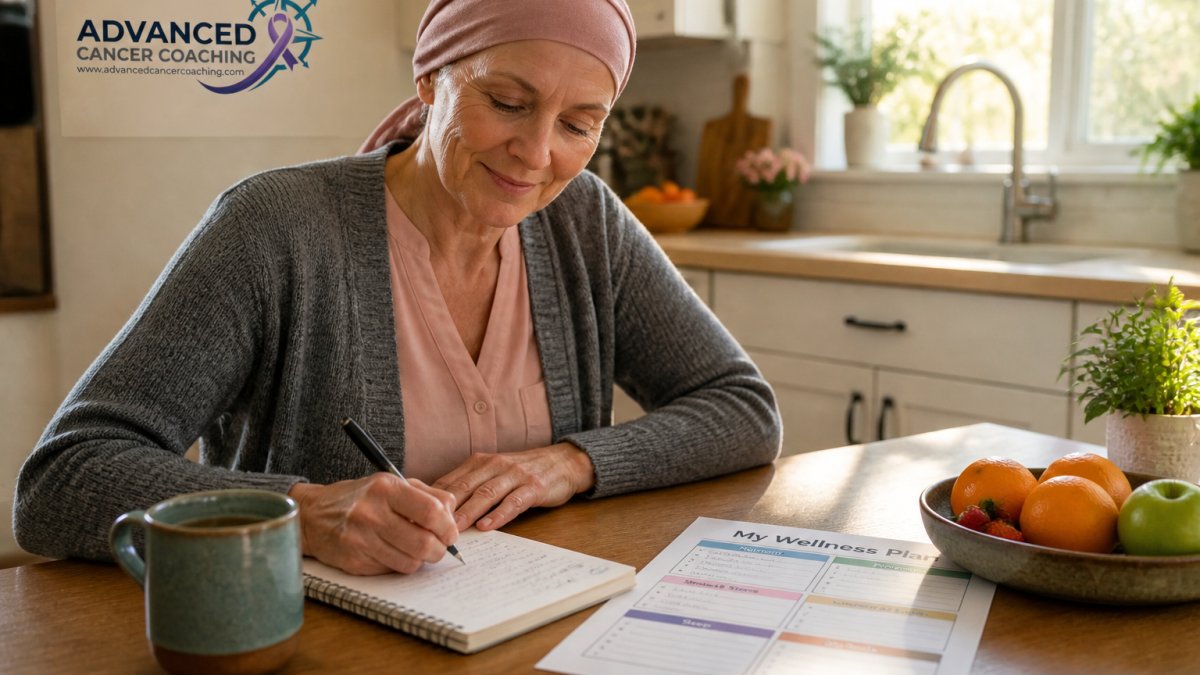
Use this template. Fill it in with your care team.
| Plan Area | Your Goal | How You'll Track It | Review Date |
|---|---|---|---|
| Nutrition | Add protein to breakfast daily | Food log, 5 days a week | Every 4 weeks |
| Movement | Walk 15 minutes, 5 days a week | Phone step count | Every 2 weeks |
| Sleep | Same bedtime 6 nights a week | Simple sleep diary | Every 2 weeks |
| Stress | 10 minutes of breathing or prayer daily | Checkmark on calendar | Every 4 weeks |
| Symptoms | Log pain and fatigue scores | 1-10 scale, twice daily | Every visit |
Keep goals measurable and small. "Sleep better" cannot be tracked. "Lights out by 10:30 on weeknights" can.
For a fully personalized version, Advanced Cancer Coaching builds plans around your treatment summary, labs, and day-to-day symptoms through phone, Zoom, or in-person sessions.
Recovery after cancer asks you to make dozens of decisions with incomplete information, and generic advice makes that harder, not easier. Advanced Cancer Coaching helps you cut through it with precision nutrition, lifestyle management, and personalized coaching built around your treatment history and current needs. Our founder, Mark Simon, brings more than 20 years of research experience on diet and natural agents. Get started with Advanced Cancer Coaching and turn scattered advice into one clear plan you can follow.
Frequently Asked Questions
What should a wellness plan for a cancer survivor include?
A practical plan covers nutrition, movement, sleep, stress management, and follow-up care. It should reflect your specific treatment history, cancer type, and current symptoms. Start with two or three measurable goals, such as walking 20 minutes three days a week or adding one protein-rich food to each meal. Review the plan with your oncology care team and primary care provider so everyone works from the same information. A survivorship care plan from your treatment center provides the clinical foundation; your wellness plan builds daily habits on top of it.
How do I create a personalized cancer survivorship care plan?
Ask your oncology team for a written survivorship care plan at treatment completion. It should list your diagnosis, treatments received, follow-up schedule, and recommended screenings. Then layer on personal goals: pick one nutrition change, one movement goal, and one stress or sleep habit. Track them weekly. If your cancer center does not provide a formal plan, request your treatment summary and build the schedule yourself with your primary care provider. Personalized wellness plans work best when they match your energy levels and daily routine.
What kinds of exercise are appropriate after cancer treatment?
Most survivors can safely start with walking, light resistance bands, or stationary cycling. Aim for 150 minutes of moderate activity per week, but build gradually. If you had surgery, ask your surgeon about lifting restrictions before starting strength work. If you have neuropathy, balance issues, or bone loss, choose low-impact options and consider working with a physical therapist who has oncology experience. Exercise after cancer treatment reduces fatigue and supports mood, but the right starting point depends on your treatment history and current fitness.
How can cancer survivors manage fatigue and stress?
Managing fatigue after cancer treatment starts with pacing: alternate activity with short rest periods instead of pushing through exhaustion. Keep a simple log of when your energy dips to spot patterns. Light exercise, hydration, and consistent sleep and wake times often help more than long naps. For stress, try five minutes of slow breathing or a short daily walk outdoors. Tell your care team if fatigue suddenly worsens, since it can signal anemia, thyroid changes, or other treatable issues that need attention.